



IR Information
Environment Cross-Functional Strategy Supporting Business Growth Fuji Electric Report 2026
Profile
Fuji Electric’s Reason for Existence0.2MBPDF Business Areas and Strengths0.8MBPDF History of the Energy and Environment Businesses0.6MBPDF Value Creation Process0.3MBPDFTop Message
Message from the Chairman of the Board and CEOWEB Interview with the President and COOWEBManagement Foundation
Important Issues for Management (Materiality)0.6MBPDF Progress of Management Reforms0.1MBPDFBusiness Planning and Financial Strategy
Progress of the FY2026 Medium-Term Management Plan0.2MBPDF Financial and Capital StrategiesWEBOverview of Segments
Basic InformationWEB EnergyWEB IndustryWEB SemiconductorsWEB Food and Beverage DistributionWEBCross-Functional Strategy Supporting Business Growth
Research and Development / Intellectual PropertyWEB Manufacturing and ProcurementWEB EnvironmentWEB Human ResourcesWEB Respect for Human Rights0.2MBPDFEnvironment
"Through our initiatives toward Environmental Vision 2050, we will promote decarbonization and the transition to a circular economy, and contribute to the creation of a sustainable society."
In recent years, climate change has had a significant impact on a global scale. The frequent occurrence of natural disasters around the world and the serious impacts on ecosystems have become threats that cannot be overlooked for the sustainability of society and the economy. It is becoming increasingly important for our company to accelerate the transition to a circular economy in addition to decarbonization.
Under the Fuji Electric Basic Environmental Protection Policy, we have positioned global environmental protection as an important issue for management and formulated the Environmental Vision 2050. As our Fiscal 2030 Targets, we have set the reduction of greenhouse gas emissions in line with the 1.5°C level for temperature rise set by the Paris Agreement and the promotion of a circular economy, and are working to reduce environmental impacts throughout the supply chain. The results of our periodic review of the Fiscal 2030 Targets conducted in fiscal 2025 confirmed that the targets are expected to be achievable through the major initiatives being implemented as planned.
We view society's demands regarding environmental issues as growth opportunities for the energy and environment businesses that form a pillar of our management policies. We have placed an "offense and defense" environmental strategy at the core of our business and are advancing both sides of environmental management: "offense," which responds to decarbonization demand by expanding GX (green transformation) products, and "defense," which responds to international regulations and requirements, such as the achievement of our own environmental targets.
We will also work to make appropriate disclosures in line with new standards, including the Japanese Sustainability Standards Board of Japan (SSBJ) standards, in addition to responding to the Task Force on Climate-Related Financial Disclosures (TCFD) and Taskforce on Nature-Related Financial Disclosures (TNFD), in order to improve the transparency of corporate environmental activities, risks, and opportunities as demanded by investors, customers, and the international community.
Going forward, our challenges are to formulate Fiscal 2035 Targets, strengthen our response to the circular economy, and create GX products that will strongly drive society's decarbonization, together with the technological and production innovations that support them. We will continue to make full use of the technologies we have developed in the energy and environmental fields and contribute to the creation of a sustainable society.
Fuji Electric Basic Environmental Protection Policy
- 1.Offering products and technologies that contribute to the global environmental protection
- 2.Reduction of environmental burden throughout product life cycles
- 3.Reduction of environmental burden in business activities
- 4.Compliance with laws, regulations and standards
- 5.Establishment of environment management systems and continuous improvements of the systems
- 6.Improvement of employees' environmental awareness and social contribution
- 7.Promotion of communication
Environmental Vision 2050
We aim to contribute to the achievement of a decarbonized society, a recycling-oriented society, and a society that is in harmony with nature by expanding the use of Fuji Electric's innovative clean energy technologies and energy-saving products.
Achieve a Decarbonized Society
Target carbon neutrality across the supply chain
Achieve a Recycling-Oriented Society
Promote green supply chains to reduce the environmental impact to zero throughout the entire life cycle
Achieve a Society That is in Harmony with Nature
Aim for zero impact on the ecosystem through corporate activities that contribute to biodiversity
| Category | Target |
|---|---|
| We aim to achieve the following goals in order to limit the temperature increase to 1.5°C above pre-industrial levels. |
- Greenhouse gas emissions throughout the supply chain (Scope 1+2+3): Reduction of over 46% (compared to FY2019) - Greenhouse gas emissions through production (Scope 1+2): Reduction of over 46% (compared to FY2019) * - Contribution to CO2 reduction in a society through our products: Over 59 million tons/year |
| We will promote a circular economy while complying with environmental regulations around the world. |
- Transitioning to environmentally friendly products that comply with ecological design regulations - Final waste disposal rate (including plastic waste) less than 0.5% |
* Reduction of over 54% compared to FY2013
Offense and Defense in the GX Strategy to Drive Sustainable Growth
Fuji Electric views contributing to a decarbonized society as its greatest growth opportunity and is vigorously promoting the GX Strategy as a pillar of its management policies. The strategy consists of two pillars: offense, which expands business by helping to decarbonize society through superior products, and defense, which minimizes environmental impacts from our own activities and responds to international regulations and requirements.
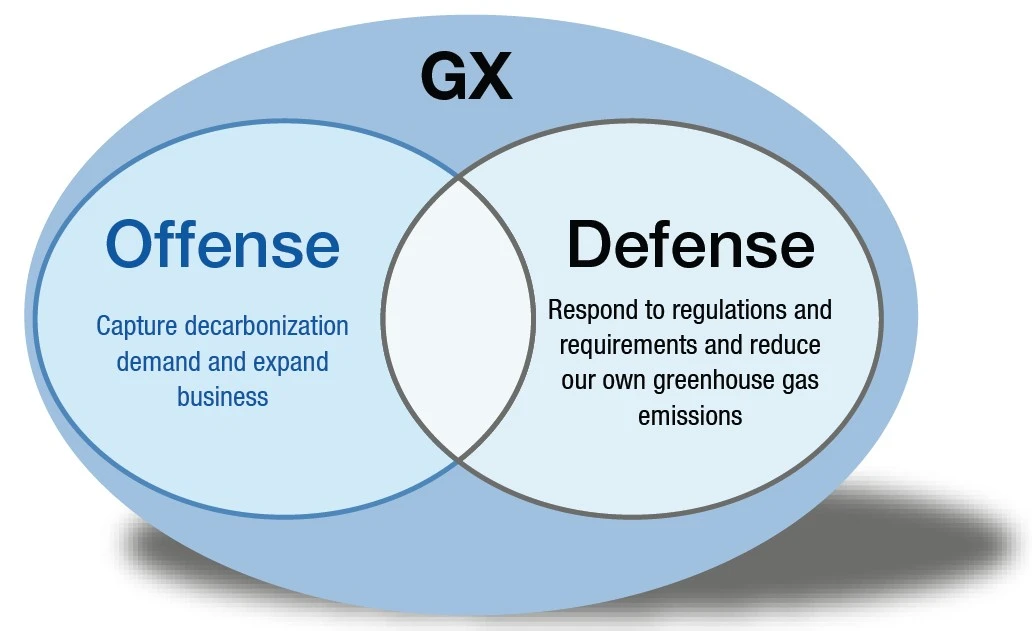
Capture Decarbonization Demand and Expand Business
We are strengthening our provision of environmental products that support the efficient and clean use of energy. By leveraging our technological strengths in the energy and environment fields to address the decarbonization challenges facing society and our customers, we will achieve sustainable growth.
Respond to Regulations and Requirements and Reduce Our Own Greenhouse Gas Emissions
We are working to thoroughly reduce greenhouse gas emissions throughout the supply chain. This initiative forms the foundation for fulfilling our corporate social responsibility.
Our contribution to CO2 reduction through our products has increased substantially as GX products have gained widespread adoption in society in step with the growth of our energy and environment businesses, making a major contribution to decarbonization.
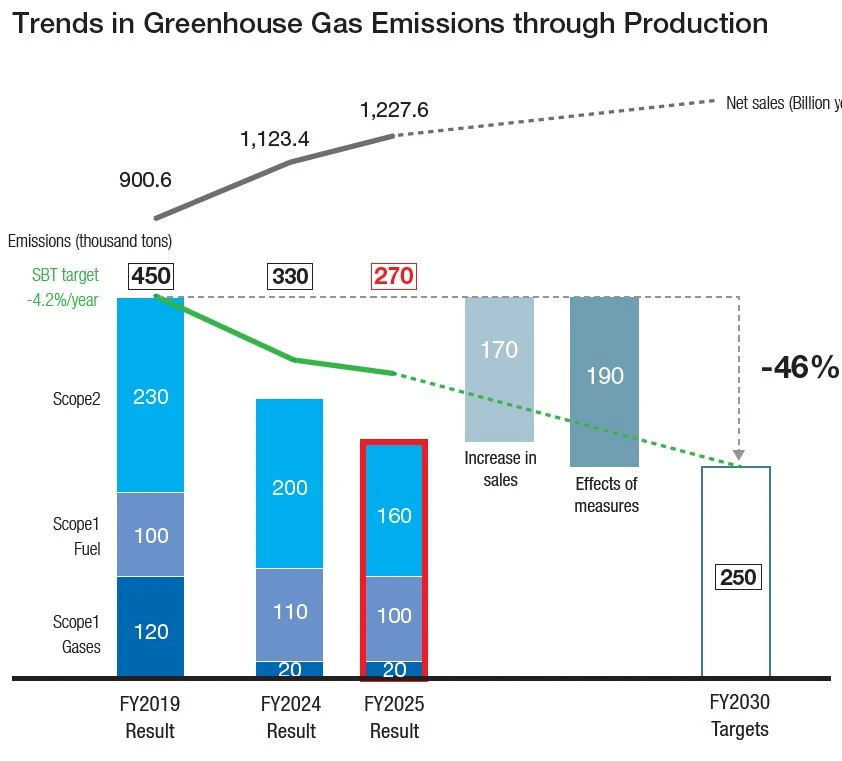
Greenhouse gas emissions from our own production activities decreased 40%, from 450,000 tons in fiscal 2019 to 270,000 tons in fiscal 2025. Together with reductions in emissions throughout the supply chain, we are making steady progress toward our Fiscal 2030 Targets. While net sales have grown to more than ¥1 trillion, we have achieved "decoupling," reducing greenhouse gas emissions even as the business grows.
Growth from Offense and Results from Defense
(Years shown are fiscal years)Net sales
(Billion yen)Greenhouse gas emissions through production
(thousand tons)Contribution to CO2 reduction in society through our products
(thousand tons)Greenhouse gas emissions throughout the supply chain
(million tons)Outlook toward the Fiscal 2030 Targets
In addition to the ambitious targets of reducing emissions throughout the supply chain by 46% or more from fiscal 2019 levels and contributing to more than 59 million tons of CO2 reduction in society by fiscal 2030, we have set a goal of transitioning to environmentally friendly products to promote a circular economy.
We will continue to install solar power generation equipment at our production bases, expand purchases of renewable electricity, and electrify fuel-consuming equipment. At the same time, we will promote the adoption of next-generation power semiconductors and high-efficiency energy management systems and launch new products in new areas of decarbonization demand. Through the further development of our GX Strategy, Fuji Electric will continue to take on the challenge of the creation of a sustainable society and further business growth.
Reducing Environmental Impacts Throughout the Supply Chain
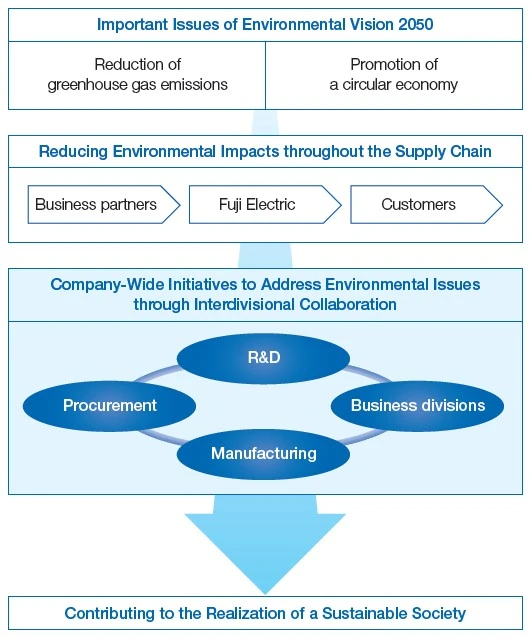
In its Environmental Vision 2050, Fuji Electric has positioned the reduction of greenhouse gas emissions and the promotion of a circular economy as important issues. Through interdivisional collaboration among business, R&D, procurement, and manufacturing, and across the entire supply chain, including business partners and customers, we are advancing the environmental vision from a medium- to long-term perspective to address these challenges and contribute to the creation of a sustainable society.
In collaboration with our business partners, we are promoting the construction of a green supply chain.
Among our activities to reduce greenhouse gas emissions throughout the supply chain, since fiscal 2025 we have been asking each business partner to calculate its greenhouse gas emissions for procured goods. With our business partners, we will identify collaborative areas for reduction through interviews and formulate action plans. Meanwhile, to calculate carbon footprint (CFP)*1 on a per-material basis, we have formulated the Fuji Electric CFP Procurement Guidelines and begun collecting data.
In addition, regarding the chemical substances used in our products, we are promoting environmental impact reduction by requesting that our business partners comply with the Fuji Electric Green Procurement Guidelines.
*1 CFP: A system to indicate the amount of greenhouse gas emissions in a product's lifecycle.
Collection of CFP Primary Data
In fiscal 2025, for five representative product models-can vending machines, low-voltage inverters, power semiconductor modules, transformers, and magnetic switches-we began a survey of primary data (Scope 3, Category 1) for approximately 3,300 items from around 250 business partners in Japan.
*3 Category 1: Purchased goods and services
*4 Category 2-8: Capital goods, transportation, waste, etc.
We are carrying out research and development aimed at creating new products that meet new needs related to GX, and we are taking on the challenge of acquiring new technologies to reduce CO2 in a society through our products in areas such as fuel conversion to hydrogen and ammonia, CO2 recovery, and the electrification of heat processes.
Regarding the circular economy, we are carrying out development of technologies that contribute to reducing environmental impacts, such as evaluation and application technologies for recycled materials, in response to international regulatory trends, as well as creating new products to realize new business models. In addition, by participating in rulemaking activities for standards and regulations, we aim to harmonize efforts to reduce environmental impacts with economic activities.
Furthermore, we are formulating a GX strategy and roadmap to serve as guidelines for these activities.
To achieve a reduction of over 46% in greenhouse gas emissions (Scopes 1+2) by fiscal 2030 (compared to fiscal 2019), we are systematically advancing innovation and enhancement of production technologies and energy-saving measures. Specifically, in addition to process transformations such as electrifying fossil-fuel-consuming equipment and lowering temperatures in drying and baking processes, we are using design for manufacturing (DFM)*2 from the design stage to reduce energy use per product. We are also using digital design information to promote automated CFP calculation and visualization. In addition, we are systematically optimizing equipment control, upgrading to the latest energy-efficient equipment, installing solar power generation equipment, and expanding purchases of renewable electricity.
In our efforts to realize a circular economy, we are thoroughly improving material yields and expanding reuse and the use of recycled materials. By promoting zero emissions to minimize waste and managing and reducing the use of chemical substances, we are pursuing both comprehensive reduction of environmental impacts and sustainable manufacturing.
*2 DFM: Designing for ease of manufacturing.
Examples of New GX Products
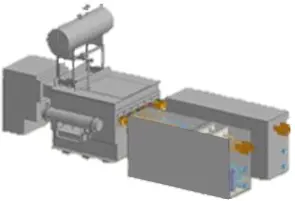
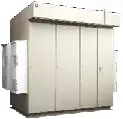
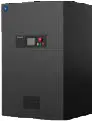
As a company operating in the energy and environment fields, we contribute to achieving carbon neutrality in society through our products. Leveraging the synergy between our strengths in power semiconductors and power electronics, we will promote the adoption of high-efficiency equipment, including SiC (silicon carbide) power semiconductors that significantly reduce the energy consumption and weight of various power conversion equipment, and uninterruptible power systems for data centers that achieve 97% system efficiency. We will also provide solutions globally to minimize power losses, ranging from renewable energy plants such as geothermal and hydropower to energy management systems (EMS) that optimize the use of heat and electricity at factories.
For the circular economy, all divisions are collaborating to advance the transition to environmentally friendly products. Through compliance with Ecodesign for Sustainable Products Regulation (ESPR) and CFP requirements, we will pursue reduced environmental impacts throughout the product lifecycle.
Reducing Environmental Impacts throughout the Supply Chain for Low-Voltage Inverters
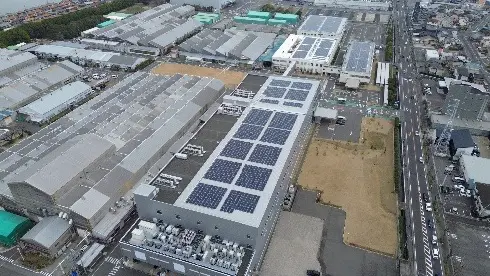
We obtained certification for using 100% renewable electricity at our Suzuka Factory low-voltage inverter production line. The factory has promoted the installation of solar power generation equipment and energy-saving measures, and in July 2025, the production line achieved operation using 100% renewable electricity.
We are also participating in the Development and Verification of a New System to Certify and Display Actual CO2 Emission Reductions from Motors/Inverters, announced by JEMA (Japan Electrical Manufacturers Association). We are advancing visualization of CO2 emission reductions during the product operation stage of low-voltage inverters and working to reduce environmental impacts throughout the supply chain for low-voltage inverters.
Initiatives to Achieve a Decarbonized Society
| Environmental Vision Fiscal 2030 Indicators |
FY2024 | FY2025 | FY2030 Target |
||
|---|---|---|---|---|---|
| Result | Target | Result | Measures | ||
| Greenhouse gas emissions throughout the supply chain (Scope 1+2+3) (million tons) |
56 | - | 55 | ・Increase percentage of 7th-generation IGBTs | 67 or less |
| Reduction rate (compared to 2019) | -55% | - | -56% | Over -46% | |
| Greenhouse gas emissions through production (Scope 1+2) (thousand tons) |
33 | 34 | 27 | ・Expand installation of solar power generation equipment at the Company's production bases ・Upgrade to energy-efficient equipment ・Electrification of fuel-consuming equipment ・Expand purchasing of renewable electricity |
250 or less |
| Reduction rate (compared to 2019) | -27% | -24% | -40% | Over -46% | |
| Contribution to CO2 reduction in a society through our products (thousand tons) | 57,690 | - | 58,880 | ・Preparations for the transition to environmentally friendly products | Over 59,000 |
Major Initiatives in FY2025
As part of our initiatives to reduce greenhouse gas emissions from production, we have promoted installation of solar power generation equipment at our production bases since fiscal 2022. In fiscal 2025, we newly installed and began operating the equipment at three bases in Japan. We also engaged in energy-saving initiatives across all production bases, selecting high-efficiency equipment that delivers significant energy savings when replacing infrastructure and production facilities, as well as advancing initiatives such as the electrification of fuel-consuming equipment. At our semiconductor production bases, which consume large amounts of electricity, we expanded the number of 20-year off-site PPA*1 contracts to increase purchases of renewable electricity and secure a stable supply.
Regarding emissions during product use (Scope 3, Category 11), which account for approximately 94% of greenhouse gas emissions throughout the supply chain, we curbed emissions by increasing the ratio of high-efficiency products, such as 7th-generation IGBT power semiconductors.
*1 Off-site PPA: A system for purchasing electricity via the power grid facilities from renewable energy generation facilities installed off-site
Initiatives toward FY2030
Based on projected production plans through fiscal 2030, we verified the feasibility of our greenhouse gas reduction plan and the achievement of our targets.
We confirmed that we are expected to achieve our Fiscal 2030 Targets for each indicator, including reducing greenhouse gas emissions throughout the supply chain-which covers our own production activities (Scopes 1+2) as well as material procurement, product shipment, and post-delivery emissions (Scope 3)-and contribution to CO2 reduction in society through our products.
Our Fiscal 2030 Targets have been certified by the SBTi*3 as reduction targets that exceed the Japanese government's decarbonization target (NDC), and we are considering reduction targets through fiscal 2035 and plan to renew the certification.
Reduction of Greenhouse Gas Emissions throughout the Supply Chain (Scopes 1+2+3)
We calculate greenhouse gas emissions throughout the supply chain based on the GHG Protocol, an international standard. For power semiconductors, Category 11 (emissions during product use), which accounts for the majority of Scope 3 greenhouse gas emissions, is expected to decrease due to expanded sales of 7th-generation IGBT modules with low power loss and the shift to SiC products. We are also promoting collaborative activities with our business partners in upstream Category 1 of the supply chain. We aim to reduce greenhouse gas emissions throughout the supply chain toward achieving the Fiscal 2030 Targets.
Greenhouse Gas Emissions and Reductions throughout the Supply Chain
(million tons)| Segment | Emissions | Main products |
|---|---|---|
| Energy | 0.3 million tons | thermal power, industrial substations, etc. |
| Industry | 6.5 million tons | low-voltage inverters, drive control, etc. |
| Semiconductors | 44.0 million tons | - |
| Food and Beverage Distribution | 0.7 million tons | store distribution, etc. |
* Emission volume = Number of units shipped in the fiscal year x Lifetime emissions per product unit
Reduction of Greenhouse Gas Emissions through Production (Scope 1+2)
Based on projected production increases under the Medium-Term Management Plan, we are advancing measures to achieve a reduction of over 46% in greenhouse gas emissions from production (compared to fiscal 2019).
To expand our purchasing of renewable electricity, we are securing a stable supply through long-term contracts, and we aim to increase the share of renewable electricity in our total company-wide purchased electricity from 27% in fiscal 2025 to 55% by fiscal 2030.
*4 Amount of purchased electricity: Amount of purchased electricity + Amount of solar power generated internally
| Main Measures | Overview |
|---|---|
| Expand installation of solar power generation equipment at the Company's production bases | Operations began at three bases in Japan in fiscal 2025. New installations or expansions are planned at six bases in Japan by fiscal 2027 (bringing the total number of bases with installations in Japan and overseas to 22). |
| Updating to energy-efficient equipment | Replace production facilities, air conditioning, and lighting equipment with the latest energy-saving models |
| Electrification of fuel-consuming equipment | Replace fuel-consuming equipment, such as boilers and heating furnaces, with electric equipment |
| Expand purchasing of renewable electricity | Long-term contracts for renewable electricity |
Contribution to CO2 Reduction in a Society through Our Products
We have calculated the contribution to CO2 reduction in society through our products since fiscal 2009. In fiscal 2025, contributions increased, primarily from inverters and power semiconductor products, reaching 59 million tons, up year on year.
Following the publication of IEC 63372, an international standard for calculating reduction contributions, in January 2026, we are in the process of revising our conventional calculation method to align it with the method specified by the standard. We will strive for more objective disclosure and further expand our contribution to CO2 reduction.
Contributions to CO2 Reduction in a Society through Our Products
(million tons)* According to the Guideline for Quantifying Greenhouse Gas Emission Reduction Contribution (Ministry of Economy, Trade and Industry, March 2018), the difference in power consumption between the case in which existing products continue to operate and the case in which products with superior environmental performance are introduced to replace them is converted into an amount of CO2 emissions. For products shipped during or after fiscal 2009 during the operation period, and for products newly under scope after the scope of calculation expansion in 2022 (such as drive control systems and ED&C component products), the amount of CO2 reduction is calculated as the amount of contribution if the product is operated for one year.
CO2 emissions that can be reduced using the Company's products = (Emissions from existing products - Emissions from new products) x Number of units in operation during the current year
| Segment | Main contributing products (million tons) |
|---|---|
| Energy | Thermal and geothermal (14.4), Hydro (2.1), Solar and wind power (1.7), Facility power supplies (0.1) |
| Industry | Low-voltage inverters (30.0), Drive control (2.8), Rotating machines (0.3) |
| Semiconductors | Industrial modules, discrete devices, and chips (5.7), Automotive modules, discrete devices, and chips (0.1) |
| Food and Beverage Distribution | Vending machines (0.5), Store facilities and equipment (0.3) |
| Energy | Industry | Semiconductors | Food and Beverage Distribution | Total | |
|---|---|---|---|---|---|
| Net sales of contributing products included in the calculation | 29.0 | 46.5 | 194.3 | 58.7 | 328.4 |
| Total net sales | 394.2 | 467.2 | 237.4 | 108.0 | 1,227.6 |
| Composition ratio | 7% | 10% | 82% | 54% | 27% |
* The main contributing products included in the calculation are those listed in the legend of the graph above. Other products are excluded because it is difficult to objectively calculate their contribution to CO2 reduction, as operating conditions (load factor, operating hours, etc.) vary by project.
Initiatives to Achieve a Recycling-Oriented Society and a Society That is in Harmony with Nature
| Fiscal 2030 indicators | FY2024 Result | FY2025 Target | FY2025 Result | Key measures and activities | FY2030 Target |
|---|---|---|---|---|---|
| Final waste disposal rate*1 (%) | 0.15 | Less than 0.5 | 0.08 | Reinforcement of waste sorting, mainly at overseas production bases, and development of waste disposal contractors | Less than 0.5 |
| (Reference) Of which, plastics in Japan | 0.12 | - | 0.004 | Improved through development of waste disposal contractors | - |
| Water consumption per unit of sales (1,000 m³/100 million yen) | 0.9 | - | 0.81 | Recycling at semiconductor factories | 1.2 or less |
| Volatile organic compounds (tons) | 509 | 800 or less | 471 | Recovery rate improvement | 800 or less |
| Transition to environmentally friendly products | - | - | - | Launch of Environmentally Friendly Product Planning WG; preparations for compliance with ESPR | - |
*1 Final waste disposal/Total waste generated *2 ESPR: Ecodesign for Sustainable Products Regulation
Major Initiatives in FY2025
Regulations for the transition to a circular economy are advancing, particularly in Europe, and companies are required to implement initiatives to reduce environmental impacts throughout the supply chain and comply with information disclosure requirements. In fiscal 2025, to transition to environmentally friendly products, we newly launched the Environmentally Friendly Product Planning WG, advanced initiatives to reduce environmental impacts from the product design stage, and began developing proprietary evaluation items based on ESPR and preparing revisions to the Environmentally Friendly Design Standards.
We also worked to reduce final waste disposal, strengthening sorting and developing waste disposal contractors at overseas production bases, and maintained the high level of performance, with a final waste disposal rate of 0.08%. At production bases in Japan, we promoted plastics recycling and reduced the final waste disposal rate to 0.004%.
Initiatives toward FY2030
We are preparing to transition to environmentally friendly products that meet the requirements of environmental regulations in Japan and overseas. In response to demands for per-product traceability disclosure, including resources and environmental impacts, we are working to create a framework to support CFP calculation and the Digital Product Passport (DPP)*3.
*3 Digital Product Passport (DPP): A mechanism to provide information on topics such as product sustainability in the form of an electronic record
Transitioning to Environmentally Friendly Products
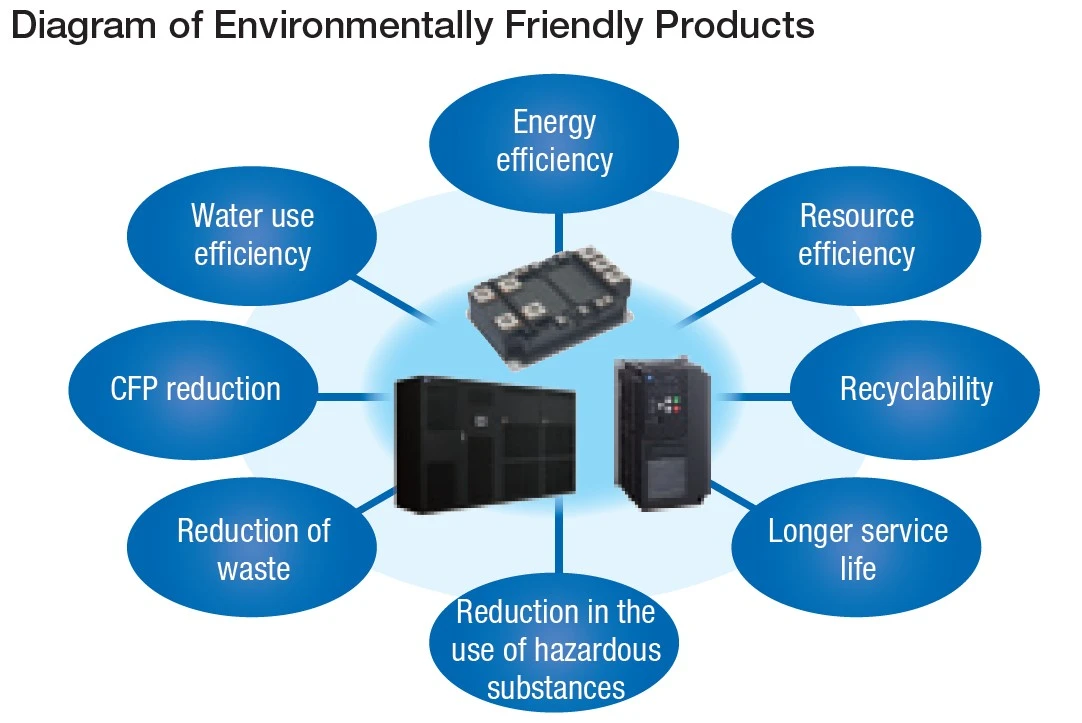
We have made the transition to environmentally friendly products, which reduce environmental impacts throughout the entire product lifecycle, a pillar of our efforts to promote a circular economy. We focused on compliance with international regulations, including ESPR, and on establishing internal systems.
Development of Proprietary Evaluation Items and Analysis of Current Status
We investigated and analyzed ESPR requirements and developed 20 proprietary evaluation items, including durability, recyclability, and CFP. Based on these items, we completed assessments of the applicability of these evaluation items to representative models such as low-voltage inverters and vending machines and clarified the issues.
Fundamental Revision of Company-Wide Design Standards
We are preparing to revise our internal Environmentally Friendly Design Standards to integrate the requirements of the international standard IEC 62430 and ESPR. In addition to conventional energy and resource savings, we are establishing systematic guidelines covering resource efficiency and information disclosure.
Future Plans
In fiscal 2026, we will focus on expanding the use of recycled materials, primarily plastics, and promote the establishment of procurement schemes in collaboration with our business partners and the development of design technologies for easy disassembly. With a view to addressing the DPP, we will also begin trials of life cycle assessment (LCA) to understand environmental impacts other than CFP. Through these efforts, we will contribute to a sustainable society while strengthening product competitiveness in the market through environmentally friendly products.
Addressing Product Carbon Footprint
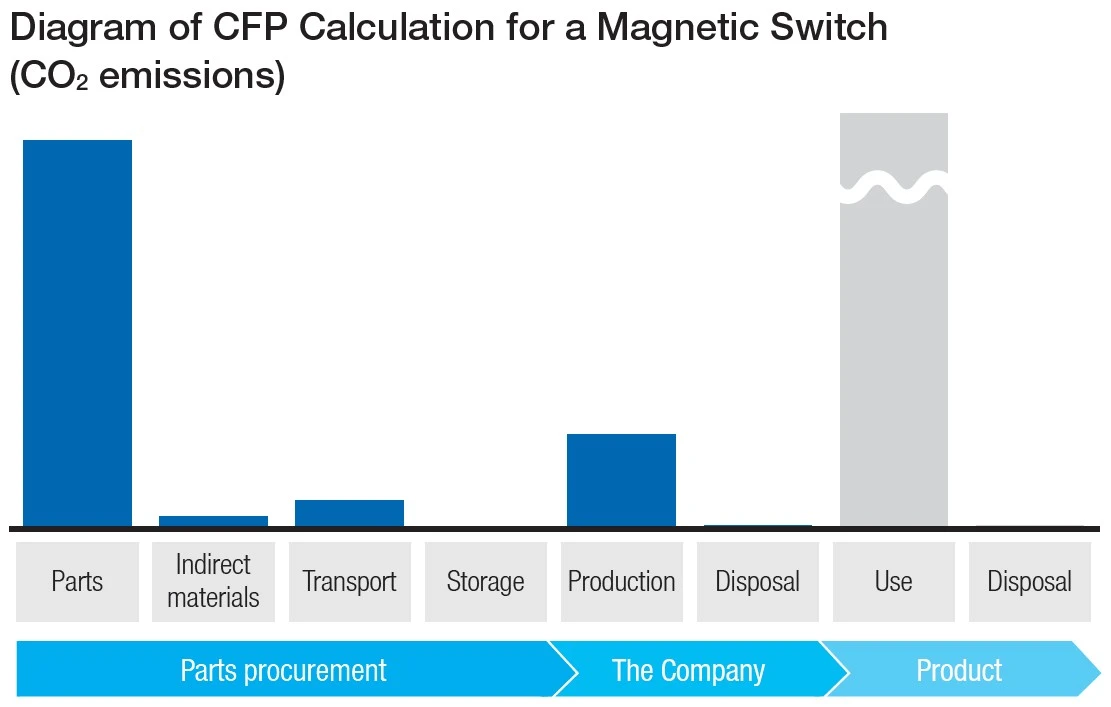
We are promoting the calculation and reduction activities of product carbon footprint to visualize greenhouse gas emissions throughout the entire product lifecycle and contribute to our customers' decarbonization.
In fiscal 2025, we formulated the Fuji Electric CFP Calculation Rules Ver. 1.0, which comply with international standards, including ISO 14067, and Japanese guidelines. The scope is Cradle-to-Grave (from resource extraction to disposal and recycling), enabling us to quantify emissions throughout the entire product lifecycle. We also developed the CFP Management Solution to improve calculation efficiency and reliability. Following trials in each Business Group, full-scale operation of this CFP calculation system will begin in fiscal 2026.
Collecting primary data for raw materials and components is essential to improving CFP accuracy. In July 2025, we published the CFP Procurement Guidelines, held briefing sessions for business partners and formulated action plans, and are promoting collaborative activities to collect primary data for key materials.
Information Disclosure Based on the TCFD and TNFD Recommendations
Since expressing our support for the TCFD in June 2020, we have continued to reflect the impacts of climate change on our business in our strategies and disclose information. In fiscal 2024, we introduced the TNFD framework and began assessing our production bases' dependencies and impacts on natural capital; in fiscal 2025, we are deepening these assessments further.
Integrated TCFD/TNFD Report Issued in July 2026
Climate change and natural capital are deeply interdependent and interact in complex ways. We regard them as an integrated set of risks and opportunities, and in July 2026 we issued an integrated report to provide stakeholders with a more unified and comprehensive understanding of our overall environmental management.
Overview of Integrated Assessment and Disclosure
Our disclosures are based on four pillars: Governance, Strategy, Risk Management, and Metrics and Targets.
| Pillars | Overview |
|---|---|
| Governance | The Sustainability Committee deliberates important climate- and nature-related issues across the Company, and we are strengthening the framework for oversight by the Board of Directors. |
| Strategy | In addition to our conventional 1.5°C/4°C scenario analyses, we expanded application of the LEAP approach recommended by the TNFD from our own bases to upstream areas of the value chain (e.g., mineral extraction), identifying priority issues directly linked to management. |
| Risk Management and Metrics | We integrate the identified risks into our company-wide management system and rigorously monitor progress toward our targets through KPIs such as greenhouse gas reduction and the water recycling rate. |
For details, please refer to the Integrated TCFD/TNFD Report.