Share


 Products & Solutions Top
Drives & Controls
UPS & Industrial Power Supply
Sensors & Measurements
Energy Management
Monitoring & Control System
Distributions & Controls
Transmission & Distribution
Transit System
Semiconductors
Energy
Food and Beverage Distribution
Service & Equipment Upgrades
Solutions
Ensuring Product Security
Share
In recent years, the term "smart factory" has become increasingly prominent in the manufacturing industry.
With exhibitions and seminars dedicated to the topic, it is a keyword garnering significant attention.
But what exactly defines a smart factory? Furthermore, what kind of manufacturing challenges can it solve on the production floor?
In this article, we will thoroughly explain the concept and benefits of smart factories, introducing real-world case studies.
We will also introduce Fuji Electric products designed to help you realize a smart factory.
A smart factory is a manufacturing facility where productivity is enhanced by connecting core enterprise systems (ERP), manufacturing execution systems (MES), and production equipment via a network. This interconnectivity streamlines the management of various data that serve as key indicators for factory management.
The concept image of a smart factory is as follows:
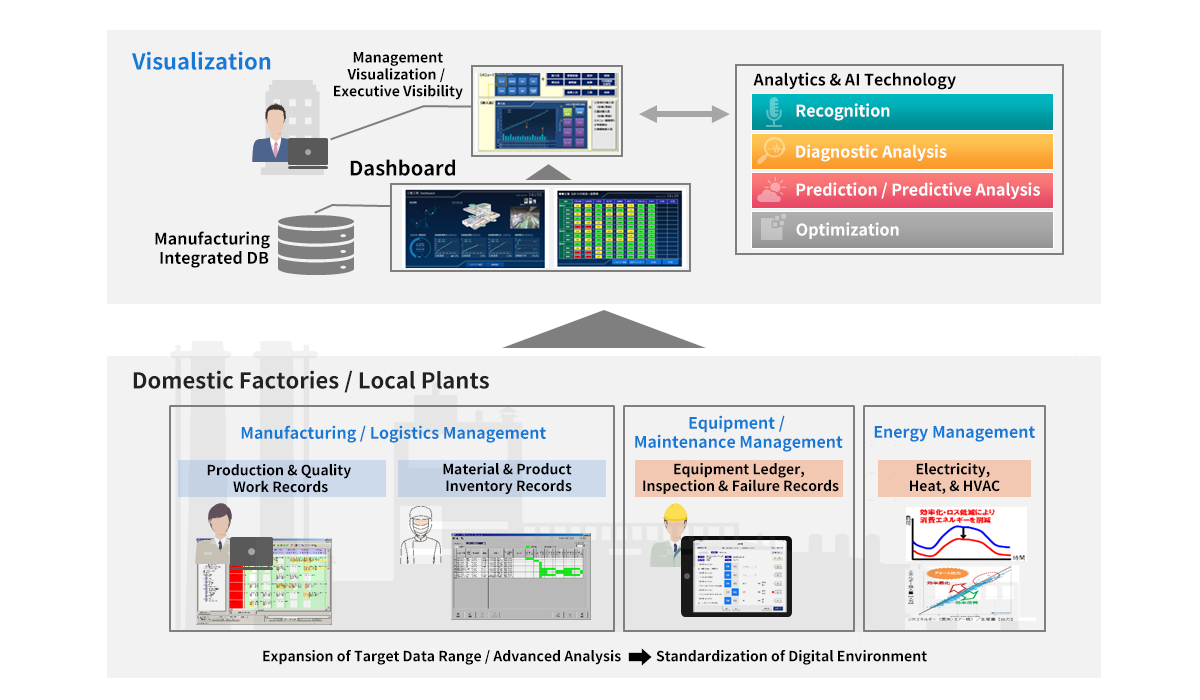
Smart factories heavily leverage AI (Artificial Intelligence) and IoT (Internet of Things) technologies. By analyzing big data collected through IoT devices, AI can visualize and resolve production line issues that occur day and night. This continuous cycle of data-driven problem identification and on-site improvement significantly boosts profitability for both the factory and the entire company.
The smart factory embodies the concept of "Industry 4.0" (the Fourth Industrial Revolution), proposed by the German government in 2011. Following this, similar strategies have emerged globally, such as Japan's "Connected Industries" concept proposed in 2017. Building smart factories has become a global trend, and market growth is expected to continue.
Additionally, Local 5G is attracting attention as a cutting-edge technology for smart factories. Once a Local 5G network is fully established within a factory, it can dramatically increase data capacity and communication speed by leveraging its features of "ultra-high speed," "ultra-low latency," and "simultaneous multi-point connections." Although primarily in the experimental stage as of 2022, it is expected to be a cornerstone of future smart factory infrastructure.
What is the most significant difference between a smart factory and a conventional one? The answer lies in the streamlined process of productivity improvement.
While conventional factories also prioritize productivity, they often rely on inefficient practices—such as stationing personnel on-site to aggregate data, manually entering paper records into computers, or performing personalized spreadsheet analysis. These methods slow down operations and lead to fatigue during improvement activities. Even with data management systems in place, disconnected platforms can make it difficult to gather and link truly essential data.
In contrast, smart factories centrally manage accurate data, allowing anyone to access necessary information instantly. This promotes rapid issue identification and prompt improvement actions. Streamlining productivity not only improves internal operations but also strengthens competitiveness against competitors—making it the greatest advantage of adopting a smart factory.
Recently, the term "DX" has frequently appeared in the media. According to the DX Promotion Guidelines by Japan's Ministry of Economy, Trade and Industry, it is defined as establishing a competitive advantage by leveraging data and digital technology to transform products, services, business models, and corporate culture to meet environmental changes.
Simply put, applying DX to the production process is the very definition of a smart factory. In other words, leveraging digital technologies to transform manufacturing workflows and build a smart factory is how DX is realized on the factory floor.
Building a smart factory helps resolve various on-site issues common in traditional manufacturing.
Ensuring product quality is paramount in manufacturing. Smart factories guarantee "quality traceability"* by linking manufacturing history data with product information. Easily identifying when, where, and how a product was made streamlines quality control and improves evaluations from end-users. Additionally, using AI-based image analysis for inspections and monitoring time-series data to detect "unusual" states reduces human error and prevents defective products from leaving the facility.
*Note
Traceability of factors affecting product quality, such as raw materials, manufacturing processes, and inspection results.
Reducing manufacturing costs is essential for a factory's profitability. While understanding the current situation is the first step, conventional factories struggle to track costs accurately. A smart factory centrally consolidates diverse data—from component procurement costs, manufacturing man-hours, and defect rates to equipment operating times, consumable replacement cycles, and energy usage (electricity and heat). Visualizing the gap between targets and actual performance clarifies areas for improvement and actionable countermeasures, leading to effective cost reduction.
The manufacturing sector is facing a severe labor shortage. Due to a declining birthrate, an aging population, a decrease in skilled technicians, difficulties in recruiting young engineers, and an increasing reliance on foreign workers, traditional Japanese manufacturing is at a crossroads. By automating processes with AI and robots, standardizing skills using big data, and digitizing manuals, smart factories can resolve chronic labor shortages and facilitate smooth knowledge transfer.
Detecting equipment failures in advance is crucial for stable factory operations. Traditionally, factories relied on "preventive maintenance"—a time-based approach where parts were replaced on a set schedule. The downside was that fully functional parts were often discarded.
Today, condition-based "predictive maintenance" is gaining traction. By analyzing equipment data to detect signs of malfunction, maintenance is performed at the optimal moment right before a failure occurs, reducing labor hours and replacement costs. Realizing an uninterrupted production line requires predicting the optimal maintenance timing for all equipment, which is why a network-connected smart factory is essential.
Even in a smart factory, unexpected production line issues can occur. However, this is precisely when the efficiency of a smart factory shines. What previously required immense time and effort—understanding the situation and pinpointing the root cause—can be done efficiently. This enables early normalization of the production line and minimizes the impact of the disruption. Analyzing the root cause to prevent recurrence helps build a more stable, resilient production line.
Building a smart factory requires investments in system development, equipment purchases, and network infrastructure. Leaping into a large-scale investment carries high risks and often turns the implementation itself into the end goal. Because it is difficult to calculate accurate ROI beforehand, securing the initial budget can be challenging.
Therefore, a phased approach is common. By conducting small-scale Proof of Concepts (PoC) repeatedly, you can identify optimal solutions for your specific issues and verify expected outcomes, minimizing risk on the path to a smart factory. Additionally, as national and local government subsidies may be available for smart factory and DX investments, it is advisable to check for released information regularly.
A smart factory cannot be built overnight. It requires a clear roadmap and continuous effort over several years; a one-off initiative will not yield returns that match the investment.
It is also crucial to remember that introducing AI or IoT is merely a means, not an objective. Achieving the true goal of a smart factory and DX requires establishing efficient business processes utilizing these technologies across the entire factory. Transforming existing workflows demands significant effort in building consensus across departments and establishing organizational support, such as a dedicated project team to promote execution.
Fuji Electric is actively implementing various initiatives to transform its own facilities into smart factories.
The Otawara Factory in Tochigi Prefecture, which manufactures power distribution equipment, has traditionally utilized IoT for advanced manufacturing. Its challenge, however, was not just implementing systems, but linking them to actual productivity improvements.
To optimize the entire factory, they introduced a "dashboard" that centrally visualizes everything from production line data to daily factory management information. By visualizing "QCD" (Quality, Cost, Delivery)—including quality, production progress, operating rates, and energy usage—in real time, it became possible to quickly implement countermeasures for issues on the production floor.
For example, when variations in production takt time were discovered via the dashboard, they identified the root causes and took countermeasures by analyzing camera footage and operational data. Repeating this cycle of identifying issues and conducting improvement activities led to a 5% improvement in productivity.
Here is a brief example of a smart factory initiative by another company.
In October 2021, Nissan Motor, a major Japanese automobile manufacturer, announced the introduction of the "Nissan Intelligent Factory" at its Tochigi Factory. This next-generation vehicle manufacturing concept aims to innovate production technologies and achieve carbon neutrality.
This initiative was driven by the need to respond to rapid environmental changes, including severe labor shortages due to an aging society, climate change, pandemics, and the shift toward electrified, intelligent vehicles. Amidst a major transformation in the automotive industry, deploying new manufacturing concepts globally and promoting smart factories is essential for overcoming challenges and achieving a significant leap forward.
In addition, the assembly and processing data collection system "OnePackEdge" contributes to smart factory initiatives and productivity improvements in engine parts production lines. Interview articles detailing customer challenges and post-implementation results are available via the link below.
Fuji Electric contributes to transforming our customers' facilities into smart factories by providing advanced IoT products and systems.
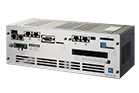
This system has a proven track record, particularly in automotive parts machining lines. It enables uniform data collection synchronized with the manufacturing cycle across various production equipment. It is equipped with practical functions tailored for shop floor operations, such as responding to equipment malfunctions, managing quality, and predicting the appropriate timing for tool replacement.
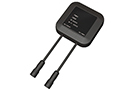
Widely adopted for predictive maintenance in industrial robots and press machines. By combining a built-in 3-axis acceleration sensor with externally connected sensors, it collects optimal data tailored to the target equipment and potential failure points. Because the collected data is transmitted wirelessly, it significantly reduces wiring and installation costs.
We offer a wide range of products and solutions tailored to various purposes. Please refer to the related product links.
The landscape surrounding Japan's manufacturing industry continues to change. To flexibly adapt to the external environment and maintain a competitive edge, implementing smart factory initiatives for rapid problem-solving and productivity enhancement is essential.
However, careful consideration is required. A smart factory is not achieved by rushing ahead with vague ideas, but through thorough upfront planning, rigorous effect verification (PoC), and the establishment of new operational processes within the factory.
From the planning and study stages to PoC implementation, equipment installation, system construction, and on-site operational support, Fuji Electric broadly supports customers in their journey toward realizing a smart factory.
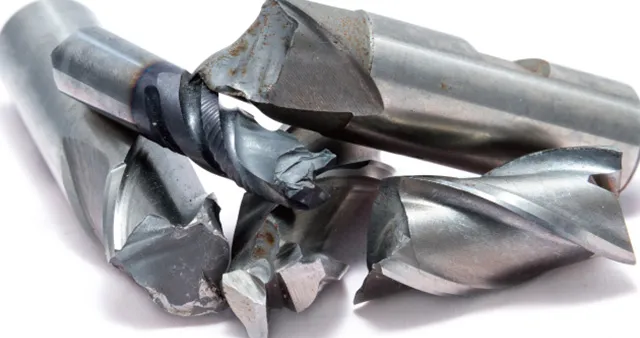
What Is The Method to Detect Tool Breakage?
March 12,2026
What Is The Life of a Tool? Explains The Types of Damage and The Methods of Life Management
March 12,2026
Factory automation offers companies a great opportunity for profit.
January 20,2021