


Share





 Products & Solutions Top
Drives & Controls
UPS & Industrial Power Supply
Sensors & Measurements
Energy Management
Monitoring & Control System
Distributions & Controls
Transmission & Distribution
Transit System
Semiconductors
Energy
Food and Beverage Distribution
Service & Equipment Upgrades
Solutions
Ensuring Product Security
Products & Solutions Top
Drives & Controls
UPS & Industrial Power Supply
Sensors & Measurements
Energy Management
Monitoring & Control System
Distributions & Controls
Transmission & Distribution
Transit System
Semiconductors
Energy
Food and Beverage Distribution
Service & Equipment Upgrades
Solutions
Ensuring Product Security
Share
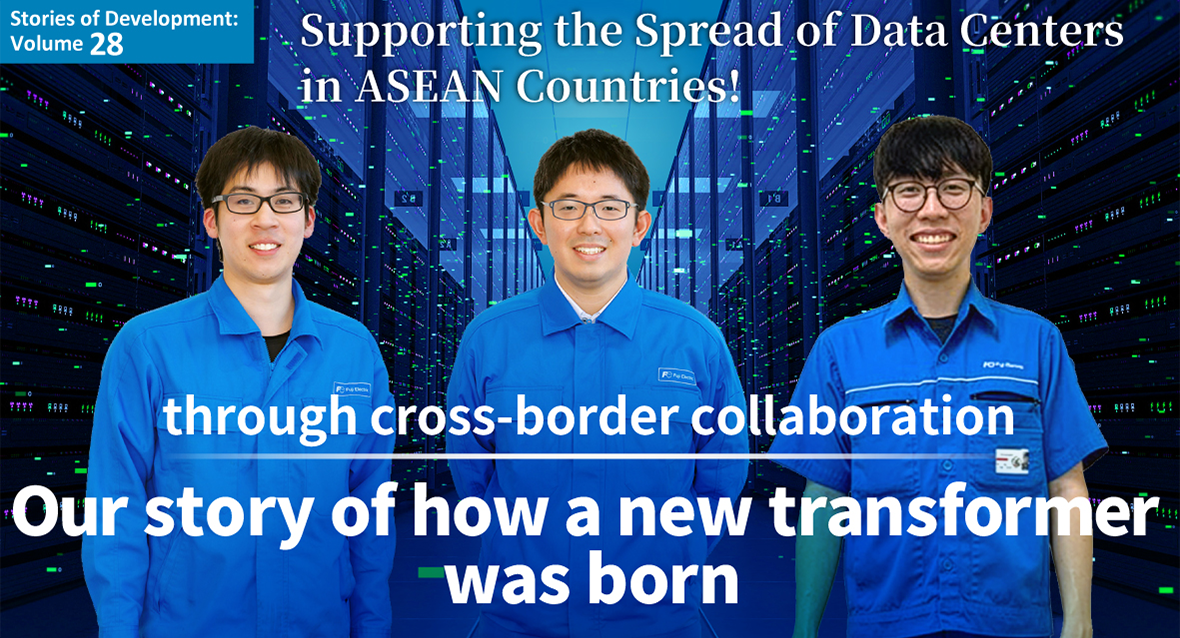
In ASEAN countries, there is rising demand for electricity at facilities such as data centers and shopping malls. In response to this rapidly expanding market, Fuji Electric has developed a new cast resin transformer called Global MOLTRA. We spoke to three employees who are working together across borders in Japan and Thailand in three different departments to expand the reputation of our 50-year-old MOLTRAs to the global market.
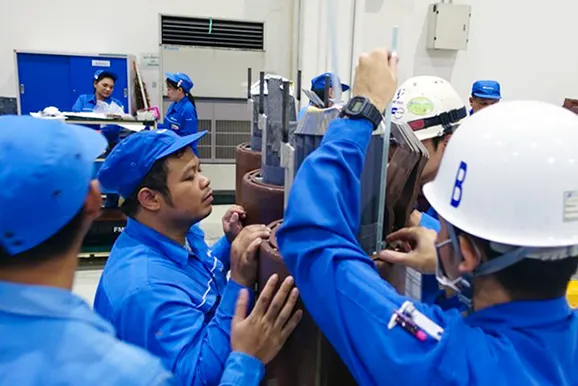
At our factory in Thailand, a Fuji Electric employee with a smartphone in hand stands by a workbench, surrounded by Thai staff. He uses the smartphone to launch a translator app.
"This size needs to be 2 mm."
"Okay, no problem. We'll tell the Thai staff."
Fuji Electric creates products in collaboration with its Thailand Factory by regularly dispatching Japanese employees to Thailand and welcoming Thai staff members to Japan for training. With the same goal in mind, employees from faraway countries stand shoulder to shoulder to produce products.
The goal is to "produce Japan quality products in Thailand."
Fuji Electric has been developing MOLTRA cast resin transformers for over 50 years. Since releasing the first model in 1974, we have gained the trust of the Japanese market, culminating in the sale of our 100,000th unit in 2020.
Fuji Electric currently has the top share in Japan. However, "if we continue to look only at the Japanese market, we'll eventually be left behind," as noted by Mr. Maeda from the Transmission and Distribution Components Development Department.
ASEAN countries are building data centers one after another as their economies grow. The market for cast resin transformers, which are geared toward power-intensive data centers, is expected to grow at an average annual rate of more than 10% through 2030.
In addition, some factories and buildings in ASEAN countries have facilities that utilize oil-immersed transformers, which use oil as an insulating material. Because this oil is flammable, it is easy for fires to spread in the event of an accident. In contrast, our MOLTRAs do not use oil, but instead utilize flame-retardant materials with high insulating performance, with almost no partial discharge, making them less prone to fires.
Our goal is to increase the adoption of Fuji Electric's safe and secure MOLTRAs in facilities in ASEAN countries. In April 2023, we started developing the Global MOLTRA for overseas markets.
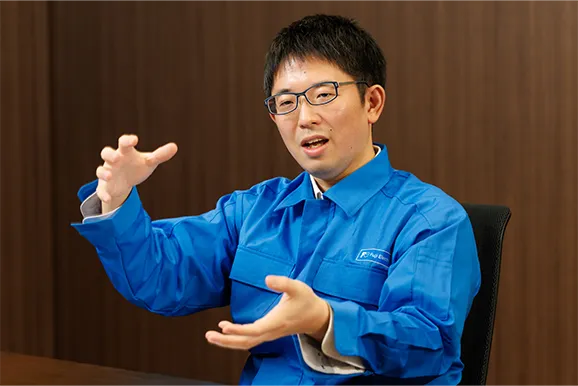
Since joining the company in 2015, Mr. Maeda has been involved in the development of MOLTRAs. This was his first experience developing a new product. Mr. Maeda recalls that he took the development process very seriously, saying, "I worked hard so that I could say proudly that 'I made this.' I really feel attached to this product."
Everybody couldn't help but nod their heads as he said this. For Mr. Maeda, the development process entailed overcoming one difficulty after another.
The first challenge involved high voltage. In large facilities such as factories and buildings, transformers need to convert the high-voltage electricity supplied by power companies into a voltage that can be safely used by equipment inside buildings. In ASEAN countries, the voltage input to transformers in these types of facilities is typically 22 kV or 33 kV, which is much higher than the 6 kV in Japan. Therefore, as a safety measure, transformers are covered with a protective housing, but using this type of structure greatly increases the size of the entire unit.
Mr. Maeda noted that "There is only so much space to install a transformer, so making it smaller and lighter was a must."
The MOLTRA has a structure in which a member called a "spacer rubber" is inserted between the primary and secondary windings to create a space known as "dimension α," an area that provides both insulating and cooling effects.
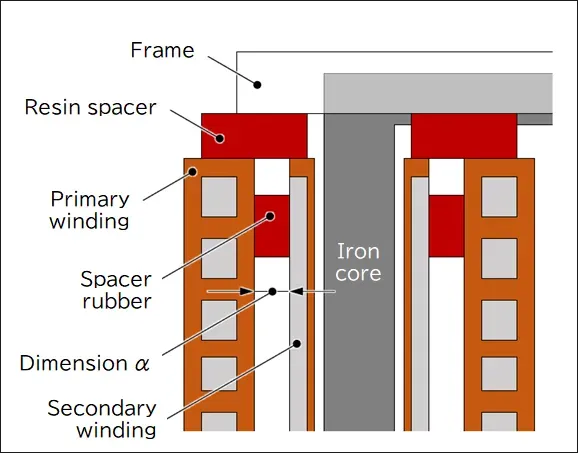
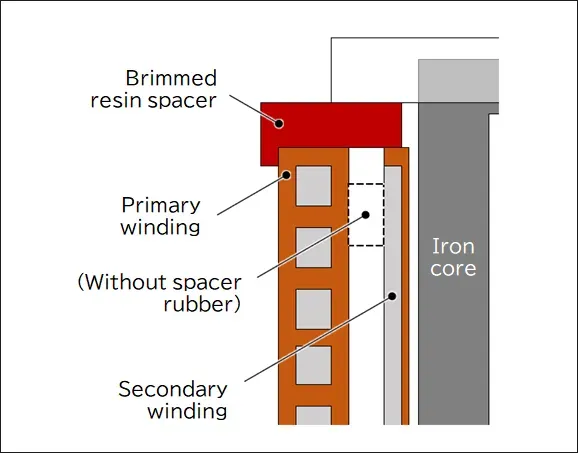
In theory, shortening dimension α should reduce the radius of the MOLTRA, leading to smaller size and lighter weight. However, the closer the windings get to each other, the greater the chance of causing electric breakdown and discharge. While the spacer rubber is inserted to maintain the insulation distance, the difference in permittivity with the air can cause concentration of electric field on the surface and inside the winding around the spacer rubber. Therefore, shortening the dimension α increases the concentration of electric field, reducing the withstand voltage performance.
Faced with this challenge, Mr. Maeda made a decision. "Let's abandon conventional wisdom and try to create a new structure."
When all was said and done, Mr. Maeda and his team had developed a "brimmed spacer." What we had done was provide the resin spacer holding the two windings in the longitudinal direction with a "brim" to fix the primary winding in the lateral direction, so that dimension α could be maintained even without the spacer rubber.
We eliminated the spacer rubber that affected the withstand voltage performance. Next, we just needed to shorten dimension α.
But this wasn't an easy task. Mr. Maeda said, "I knew I had to come up with a design that pushed the limits."
As a result, he began the process of trial and error, creating MOLTRA prototypes with various dimension α values, and applying loads to them until they broke. He pushed the limits and successfully found the dimension α value that enabled miniaturization.
In October 2024, a year and a half after beginning development, Mr. Maeda and his team finished designing the Global MOLTRA structure, equipped with brimmed spacers.
However, this was not the end of the development process for Mr. Maeda. The next thing he needed to figure out was how to reduce the amount of material used for the parts. The aim was to reduce the weight by unitizing parts made from different materials.

It took a lot of work to reduce the weight of the parts, while maintaining the same strength and performance. Mr. Maeda and his team achieved weight savings of approximately 300 kg for 2000 kVA transformers, adopting a design with a total weight of 4700 kg compared to the conventional weight of 5000 kg.
Mr. Maeda noted that "It was thought to be near impossible to further reduce the weight of transformers, since the technology had already matured greatly. In this respect, achieving a weight savings of 300 kg was quite revolutionary."
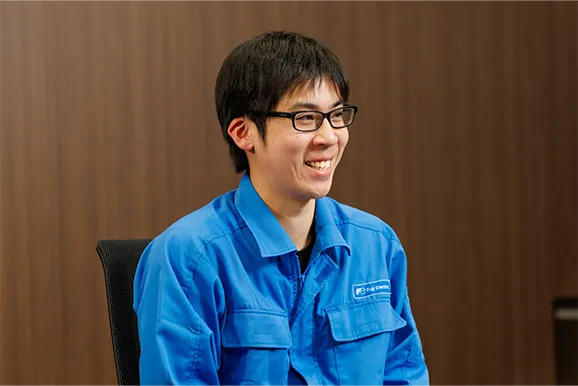
In April 2025, Mr. Maeda thought that he had the perfect system in place to begin making prototypes to verify the development results. However, there was one problem...
Mr. Hatada, who was in charge of manufacturing MOLTRAs, remembers looking at the blueprint for the Global MOLTRA and thinking, "This design will be very difficult to mass produce."
The plan was to transfer the production technology to Fuji Electric's factory in Thailand in order to mass produce the transformer. The design required a more efficient manufacturing process than other products, but Mr. Maeda's blueprint didn't seem to fully take this into consideration.
Mr. Hatada's biggest concern was that it would take about two hours to apply adhesive to the windings and brimmed spacers and wait for it to dry. Waiting two hours just isn't very efficient. Therefore, the two began discussions to try to figure out how to reconcile Mr. Maeda's design correctness with Mr. Hatada's manufacturing site feasibility.
Mr. Hatada recalled that "Mr. Maeda often came to the Manufacturing Department earnestly seeking a way to mass produce the transformer. Naturally, I also wanted to figure out how we could do it."
In response to Mr. Maeda's enthusiasm, the Manufacturing Department started to come up with one idea after another. This took a lot of "shop floor wisdom" that did not rely on computer simulations alone.
Mr. Hatada ultimately proposed a method of attaching the brimmed spacers to the frame parts that were covered from above in a later process, and then placing the parts on the windings. The method would eliminate the waiting time entirely and increase production efficiency.
To achieve this, we calculated the exact angle at which to place the cushioning material between the parts when assembling the transformer. This simplified the assembly process greatly, even enabling less-experienced workers to perform the work.
However, Mr. Hatada still had a lot of work to do.
In August 2025, Mr. Hatada visited the Thai Factory(Note) and stayed for a week. The purpose of the visit was to teach eight local staff members about the manufacturing process of Global MOLTRA.
Of course, this required overcoming both language and cultural differences. Using a smartphone translator app makes communication easier, but it is still difficult to convey the finer details of the work.
Mr. Hatada said, "Everyone at our Japan factory is a craftsman. They are able to respond with proficiency even when things aren't written in the work manual. But we can only take this for granted in Japan. For the Thai Factory, to ensure that everyone is able to do the work, we needed to document everything to the last millimeter."
This job of documenting everything in the work manual was entrusted to Mr. Pattararit, who had demonstrated himself to be very attentive to details. He commonly goes by the name Thann.
Many of the local staff have received training at our Chiba factory and are familiar with transformer manufacturing. However, Thann remarked that "The manufacturing process for the Global MOLTRA is more complicated than conventional products."
His challenge was to figure out how to proceed smoothly with this entirely new manufacturing method. Thann listened carefully to the explanations given by Mr. Hatada, writing down every little detail in the manual, such as "Make this 2 mm" and "Requires 5 mm."
Mr. Hatada, upon seeing the attentiveness of the local staff members, recalled thinking, "I was impressed to see them positively approaching even difficult tasks. Thann also made suggestions on how we might simplify the assembly process even more."
Thann said, "I'm happy that the products we are making are actually being used in Thailand. I look forward to continuing to collaborate with Japanese staff members to increase the market share of Global MOLTRA."
Note:
Fuji Electric Manufacturing (Thailand) Co., Ltd.

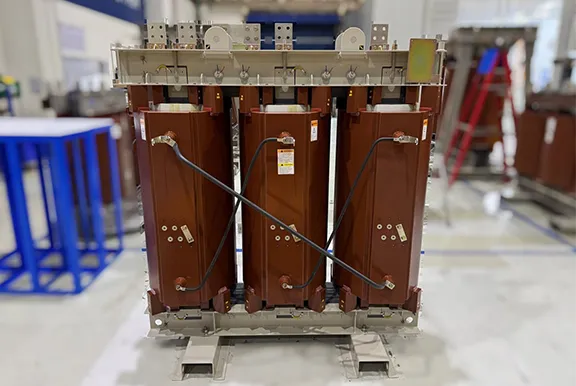
The development of Global MOLTRA was successfully completed in October 2025. It underwent and passed testing by a third-party certification body to ensure that it complies with international standards for fire resistance, thermal shock, and other specifications. This concluded the arrangements necessary to bring it to the market.
Global MOLTRA is planned to debut in the ASEAN market in April 2026. When this was announced in September 2025, Fuji Electric received a series of inquiries about it from overseas.
Mr. Hatada said, "MOLTRAs have a rich history at Fuji Electric, so it has been an honor to work on this product development."
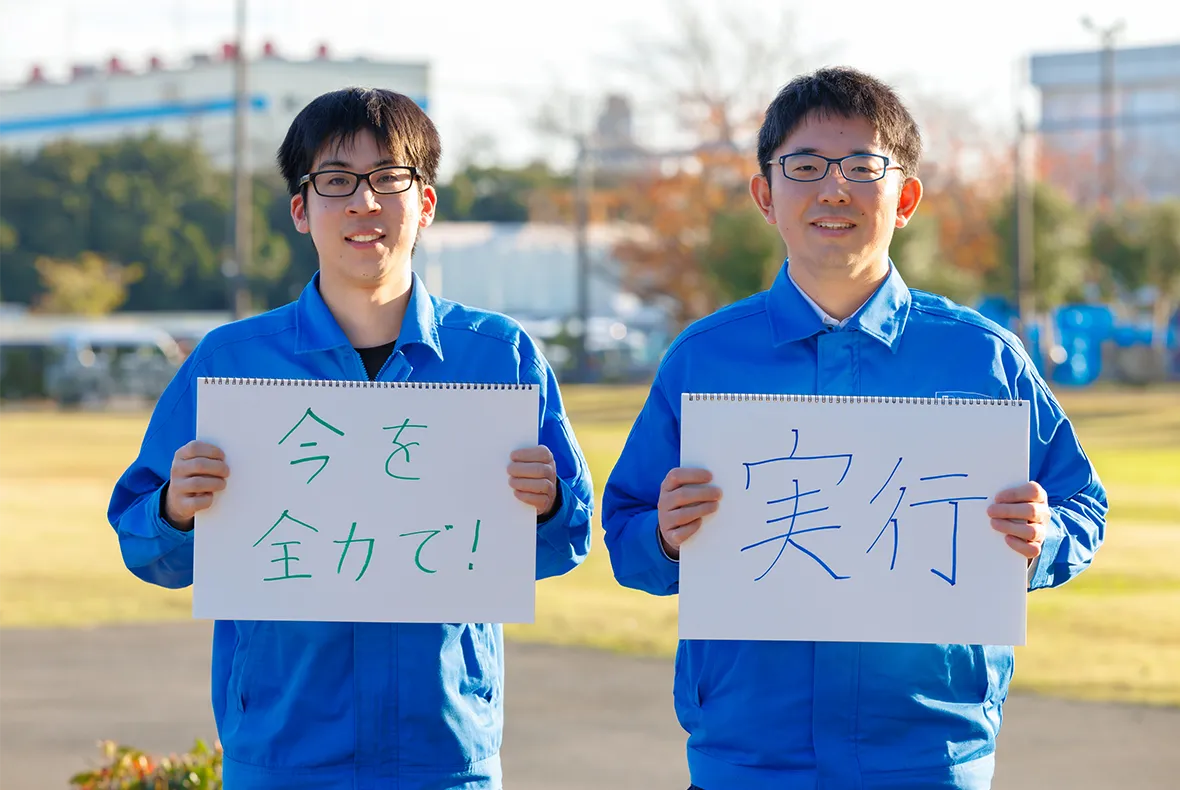
We asked Mr. Maeda and Mr. Hatada to write brief messages for students. Mr. Hatada (on the left) wrote, "Put all your effort into your work. Devote yourself entirely to your studies and hobbies now and it will pay off for you when you get older!" Mr. Maeda (on the right) wrote, "You won't get better at anything without effort. Getting started is the first big step. When you are given a job, it's important to see it through until completion."
Going forward, Mr. Maeda and Mr. Hatada plan to shorten delivery times by introducing a "skid system" that unitizes the transformers and switchboards used in the power supply facilities of data centers. Mr. Maeda remarked, "We can continue to evolve if we don't give up."
With the Thai Factory as its hub, Fuji Electric will continue to contribute to solving social issues in the ASEAN region by offering reliable products that give people peace of mind.
July 13,2026
October 31,2025
October 31,2024

October 21,2024
